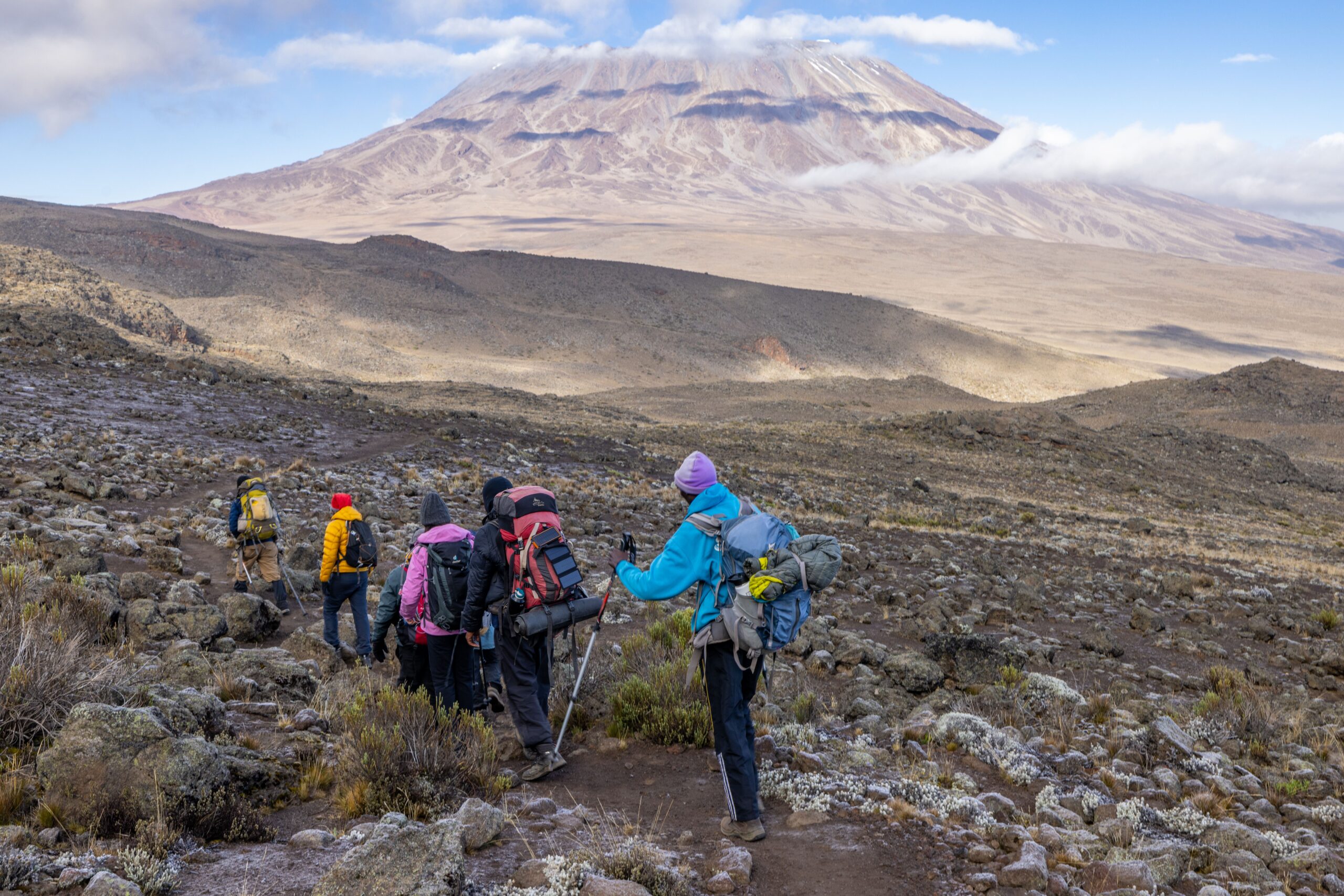
 Mountain Guide · Roof of Africa
Kilimanjaro
The tallest free-standing mountain on earth and the highest point in Africa — 5,895 metres, six main routes, and no technical climbing required to reach the top.
A Walk, Not
a Climb
Kilimanjaro doesn’t require ropes, harnesses, or technical mountaineering experience — it’s a long, high-altitude trek. The challenge is almost entirely altitude, not terrain. Success comes down to picking a route with enough days to acclimatise, going slowly, and choosing a reputable operator.
The mountain sits inside Kilimanjaro National Park and can only be climbed with a licensed guide and porter team — solo climbing isn’t permitted. Every route passes through five distinct ecological zones, from farmland to alpine desert to arctic summit.
Most climbers base in Moshi or Arusha the night before starting, and again after coming down.
Quick Facts
Six Ways to
the Summit
Route choice is the single biggest decision on a Kilimanjaro trip — it affects your odds, your scenery, and your budget.
Five Climates
in One Trek
800m–3,000m. Humid, green, and home to colobus monkeys on the lower trail days.
3,000m–4,500m. Giant lobelia and heather give way to bare volcanic rock and thin air.
Above 5,000m. Arctic conditions, night summit push, and Kilimanjaro’s shrinking ice fields.
The Real
Challenge
Altitude, not fitness, is what turns climbers back. Above 3,000m the air thins fast, and the body needs time to adjust — rushing the schedule is the single biggest reason people don’t summit, or get badly sick trying. The guiding principle every reputable operator builds around is “climb high, sleep low”: trek to a higher point during the day, then descend to sleep at a lower camp, which helps the body acclimatise faster than sleeping at the day’s highest point.
Watch for headache, nausea, loss of appetite and disturbed sleep — the early signs of altitude sickness. They’re common and usually manageable, but worsening symptoms mean descend, don’t push on. Good guides carry a pulse oximeter and check your blood oxygen twice a day; ask your operator whether this is standard practice before you book.
Trek Quick Facts
Choosing an
Operator
Confirm licensing
Every operator must be registered with Kilimanjaro National Park (KINAPA) and hold a valid climbing permit. Ask to see it — a legitimate operator will show it without hesitation.
Ask about porter treatment
Porters carry the camp up the mountain in the same conditions climbers face. Ask about their pay, gear, meals and load limits (KINAPA caps porter loads at 20kg) — operators who treat porters well are usually the ones who run everything else well too.
Check price inclusions
Park fees, guide and porter wages, food, tents and transport to the gate should all be in the quoted price. A price that looks far cheaper than others usually means something — often porter wages — has been cut.